Turning 3D learning into muscle memory

Replacing technical documentation with interactive play to scale Womp's activation to 500k users.

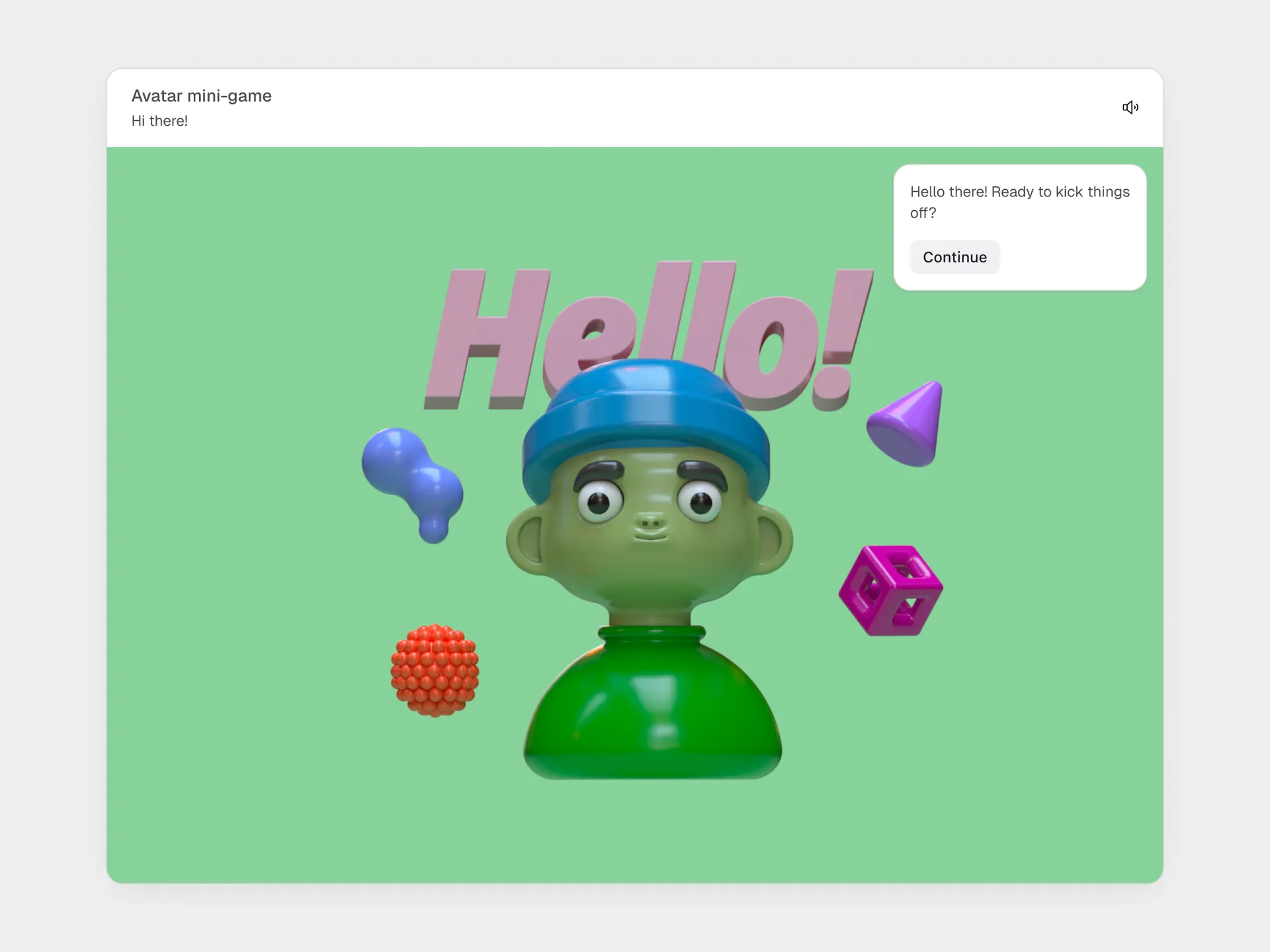
Womp avatar mini-game hero

The Problem: "The Freeze"

Womp is a browser-based 3D tool designed for non-3D people. But when new users opened the viewport, they froze.

"How do I rotate?" "Where is zoom?"

Within 2 minutes, most bounced. We had thousands of users hitting the same wall. Traditional solutions failed: human-led walkthroughs were unscalable, and users simply ignored written tutorials.
The Insight

People learn by tinkering, not reading

In 50+ user testing calls, we observed that users naturally wanted to click and drag. They treated the tool like a toy, not a manual.

Fear of breaking things

Users hesitated because they feared making a mistake. They needed a "safe mode" where no action was wrong.

Solution: The "Hidden" Curriculum

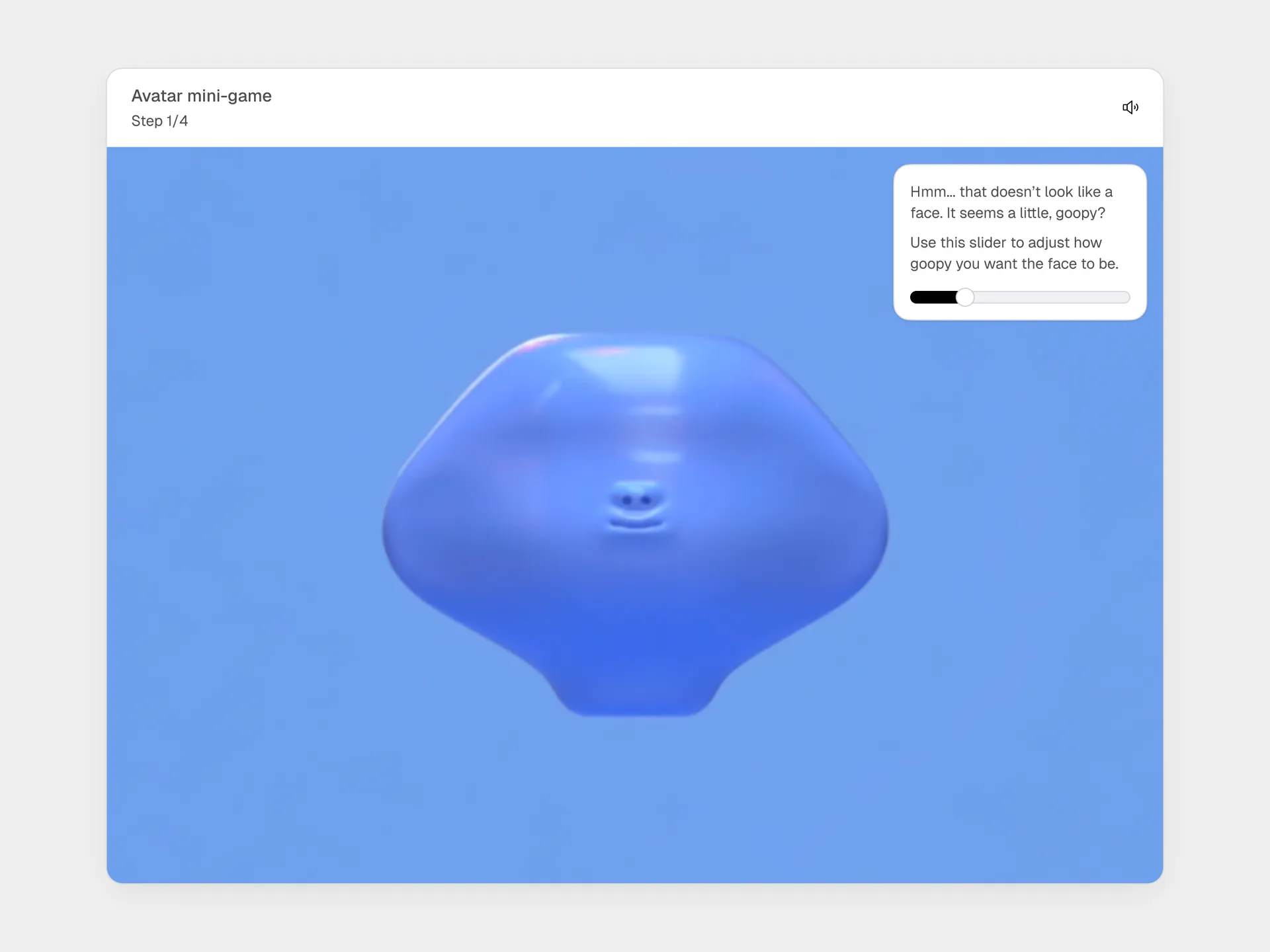
Instead of a "Tutorial", we built a Mini-Game. We asked users to create a simple Avatar. This wasn't just for fun—it was a Trojan horse for the curriculum.

How the Game Teaches 3D

1

Camera & Navigation

New users often got lost in infinite 3D space. By locking the focus to the object, we forced them to learn Orbiting naturally just to see the back of the head.

Camera orbit instruction interface

Forcing interaction with camera controls to reveal hidden details

2

Movement & Assembly

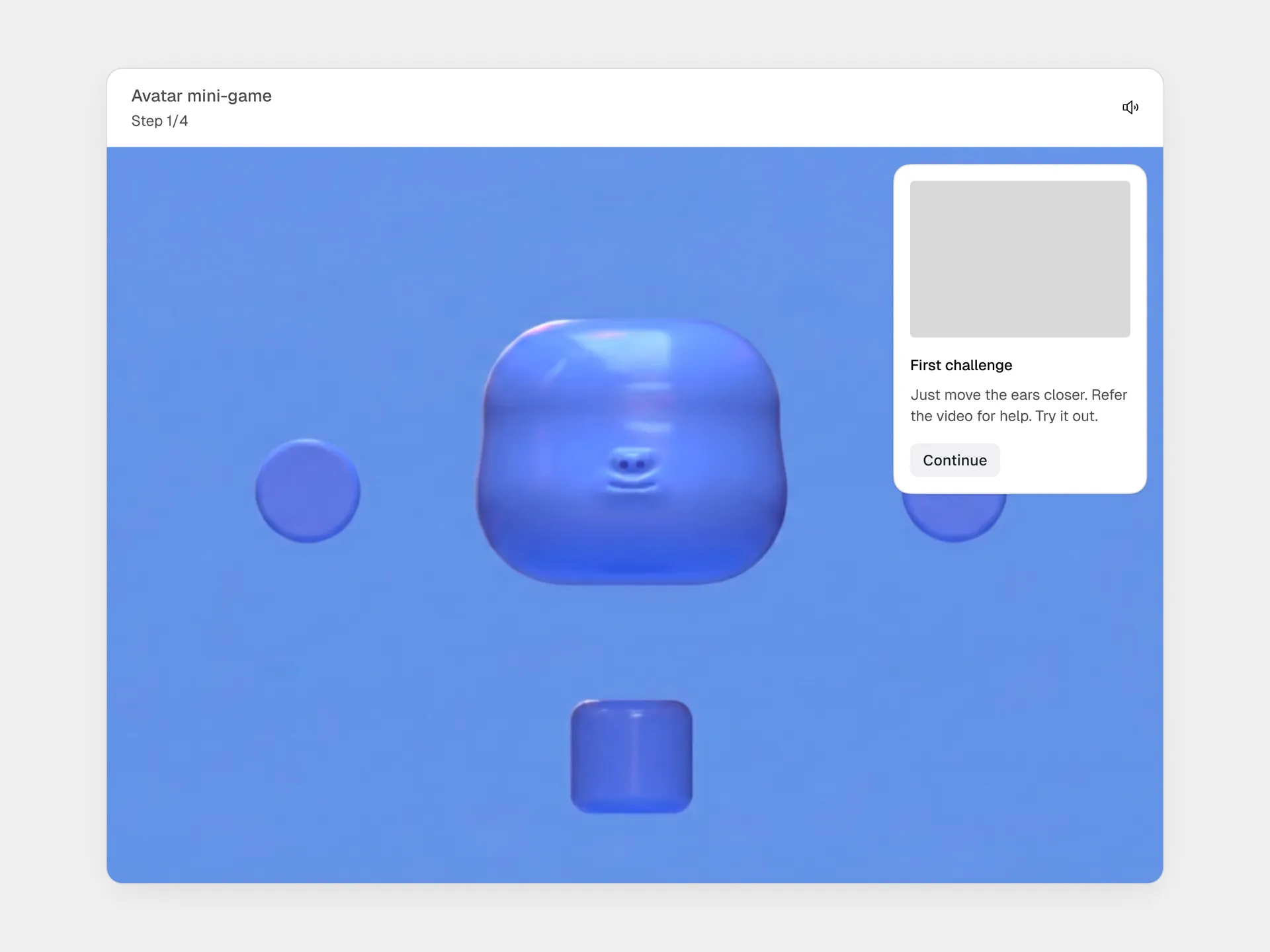
Aligning objects is the steepest learning curve. We simplified this into a low-stakes "hat placement" task, giving users a clear reason to master the gizmo axes (X/Y/Z).

Object movement instruction interface with hats

Teaching translation tools through simple object assembly

3

Customization & Materials

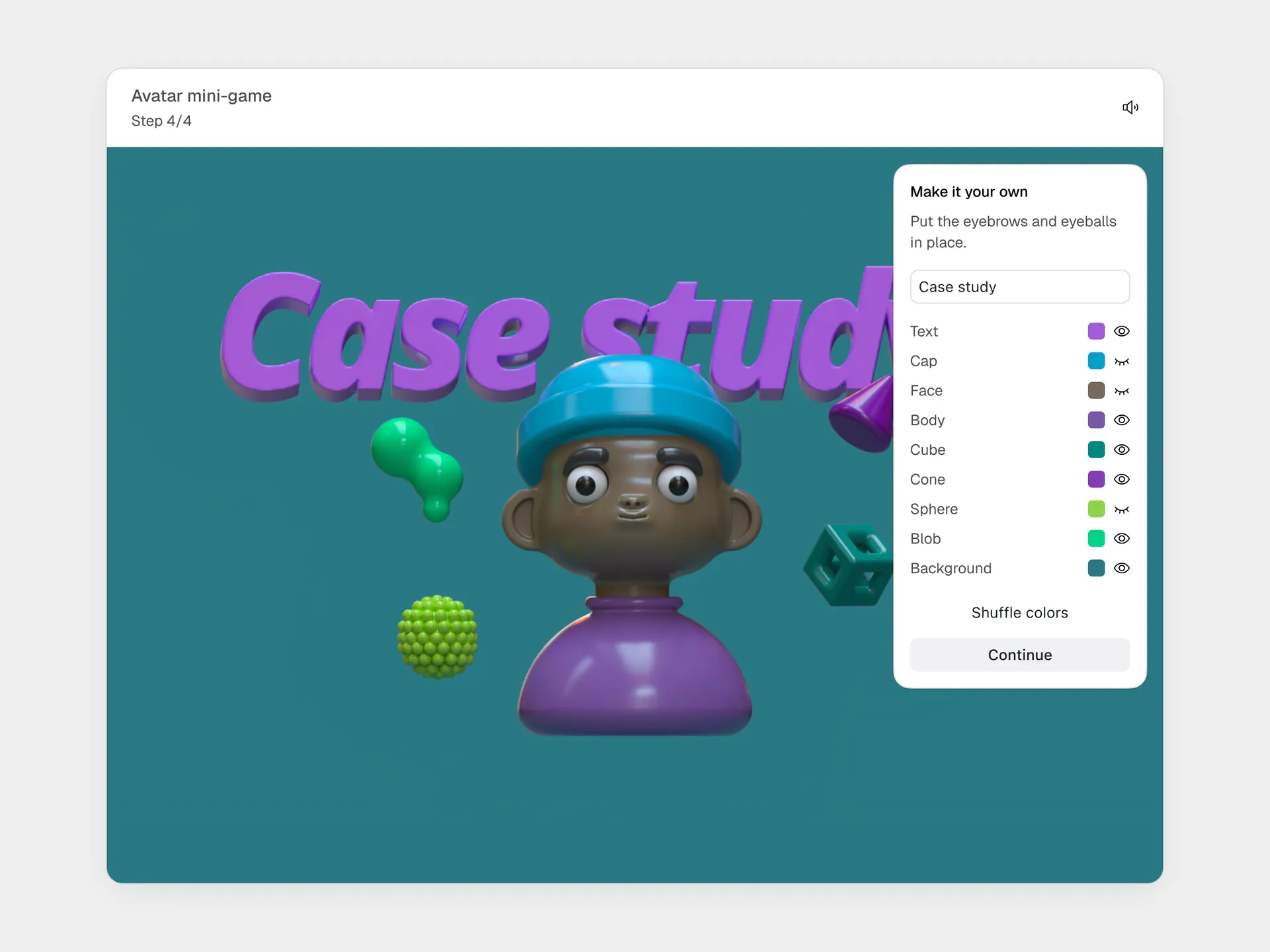
We used "Make it yours" as the hook. While users focused on creative expression with materials, they were silently mastering object selection and property editing.

Deep customization interface

Material and color customization to foster ownership

4

The Payoff

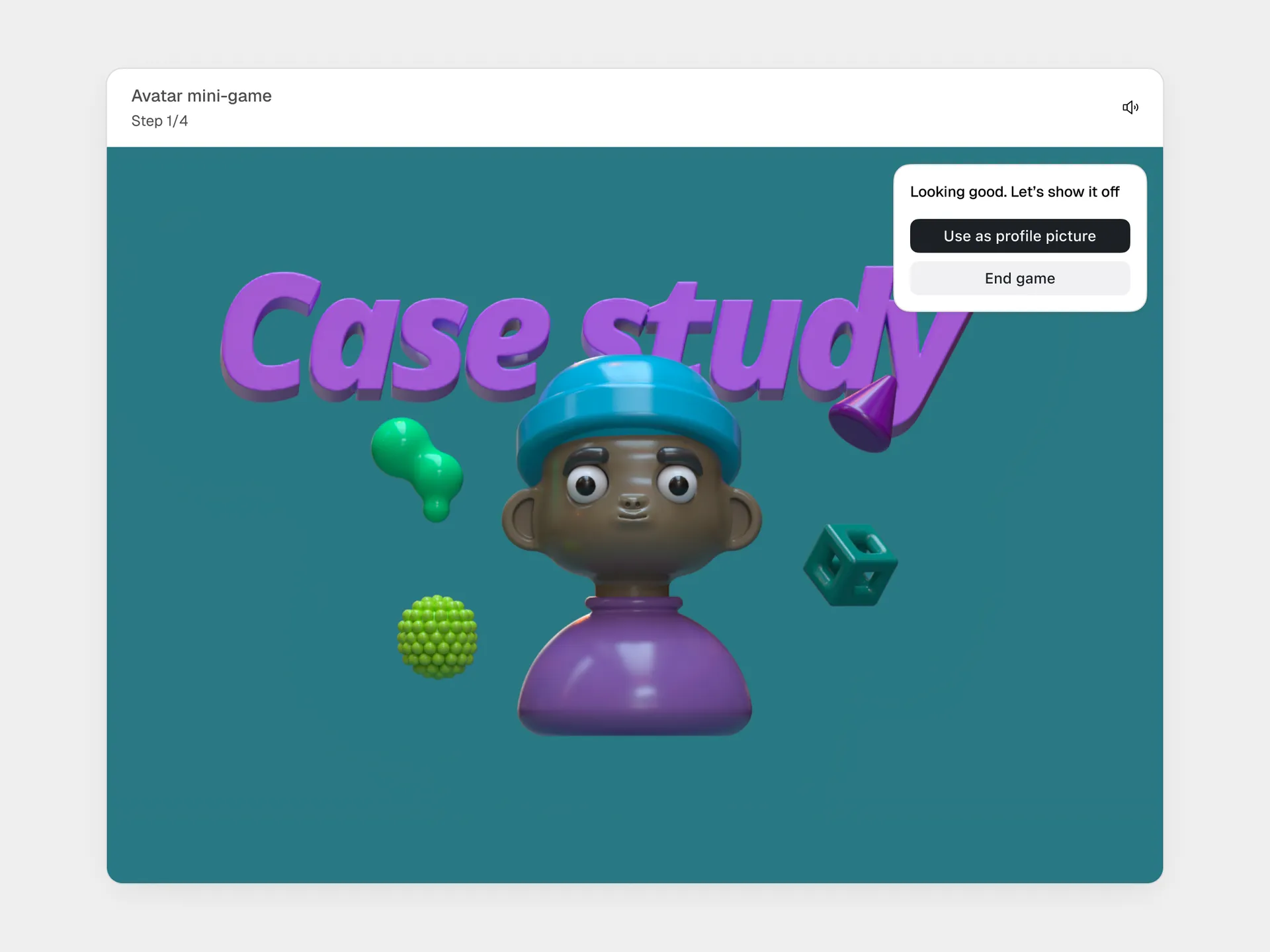
Users could set their creation as their profile picture or enter the editor. By the time they hit "Finish", the tool wasn't scary anymore.

Profile picture set and finish screen

Seamless transition from learning to using the product

Why This Worked (Psychology)

Active vs. Passive Learning

Tutorials ask users to memorize abstract rules. Games force them to use those rules to solve immediate problems.

Result: Engagement jumped from <10s to 3+ mins

Psychological Safety

The "fear of breaking" freezes new users. By providing a sandbox where mistakes were impossible, we turned anxiety into curiosity.

Result: "Freeze" behavior effectively vanished

The "IKEA Effect"

Users value things they build themselves. Creating an avatar gave them a personal stake in the platform before they even entered the main editor.

Result: Higher retention for game completers

Muscle Memory > Logic

You don't learn to ride a bike by reading a manual. We prioritized "feeling" the controls (Orbit, Pan, Zoom) over intellectually "explaining" them.

Result: Frictionless transition to complex tools

Impact

500k

Activated Users

Scaled with zero increase in support staff

~0%

"How to Move"

Basic navigation questions virtually disappeared

3 min

Time to Competence

From "frozen" to "builder" in one session

The community discord shifted overnight. The conversation changed from "How do I move the camera?" to "Look what I made!". We didn't just teach tools; we broke the fear of 3D.